

BLOG
Modacrylic Fabric Explained
[ 25.07.2026]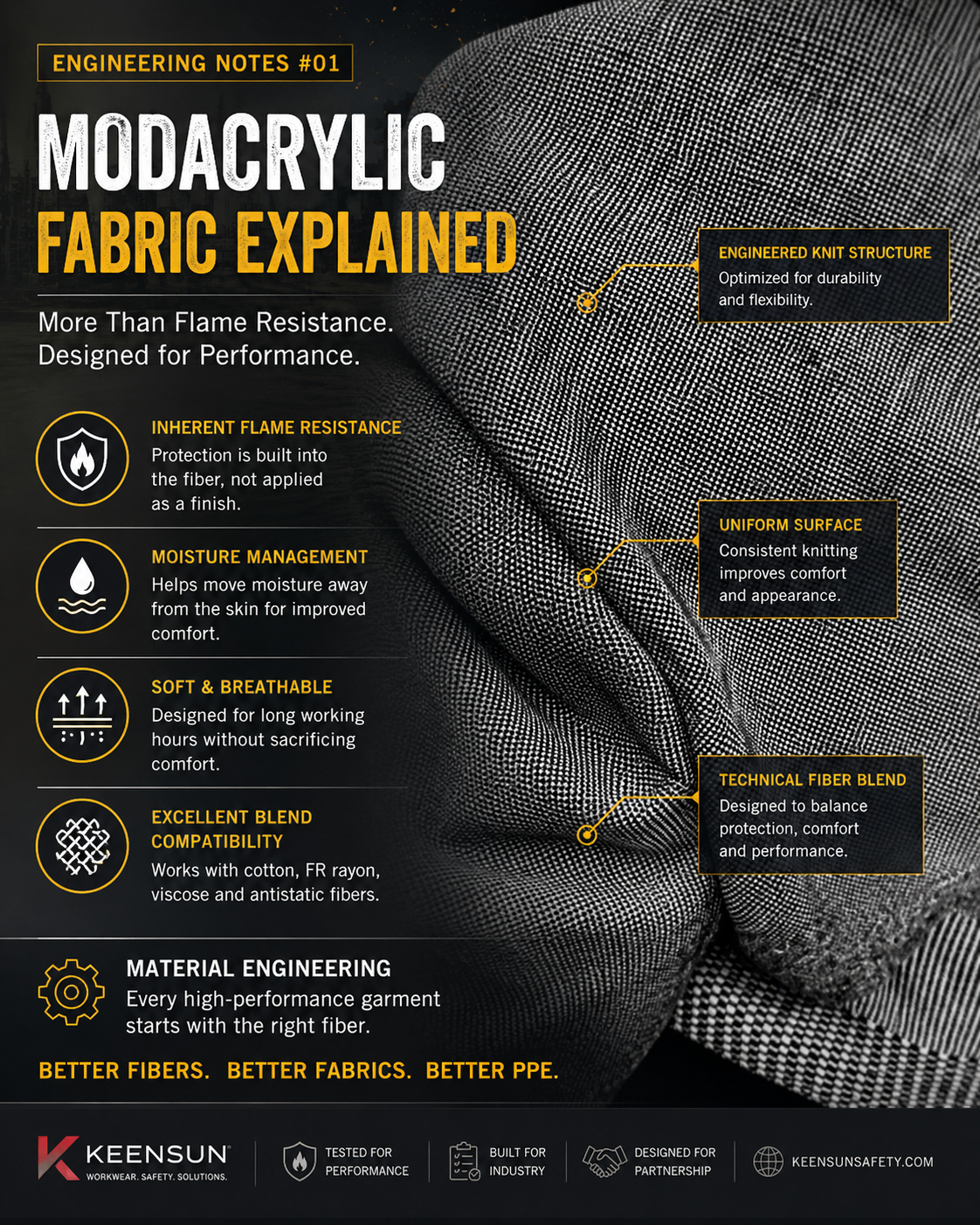
Engineering Notes #01
Modacrylic Fabric Explained: More Than Flame Resistance
When people hear the word Modacrylic, they often think of one thing—flame resistance.
While that's true, it tells only part of the story.
At Keensun, we believe the value of Modacrylic goes far beyond meeting safety standards. It is one of the key materials that helps us engineer FR base layers that workers actually want to wear.
Because in PPE, protection alone isn't enough. Comfort, mobility and durability are equally important.
What Is Modacrylic Fabric?
Modacrylic is an inherently flame-resistant fiber. Unlike chemically treated fabrics, its flame-resistant properties are built into the fiber itself, providing long-lasting protection throughout the garment's service life.
This makes Modacrylic a trusted choice for industries such as:
- Oil & Gas
- Electrical Utilities
- Mining
- Manufacturing
- Industrial Maintenance
It is commonly used in FR base layers, underwear, balaclavas, socks and other next-to-skin protective garments.
More Than Flame Resistance
A high-quality FR base layer must do more than resist flames.
Workers wear these garments for eight to twelve hours a day, often in demanding environments.
That's why we focus on the overall wearing experience.
Inherent Flame Resistance
Protection is built into the fiber, offering reliable FR performance without relying on chemical finishes.
Moisture Management
Modacrylic blends help move moisture away from the skin, improving comfort during long shifts.
Soft & Breathable
When blended with fibers such as cotton or FR rayon, Modacrylic creates fabrics that are soft, breathable and suitable for next-to-skin wear.
Excellent Blend Compatibility
One of Modacrylic's greatest strengths is its compatibility with other performance fibers.
It can be engineered with:
- Cotton
- FR Rayon
- FR Viscose
- Antistatic fibers
- Stretch fibers
to create fabrics that balance protection, comfort and durability.
Engineering Starts with the Fiber
At Keensun, material selection is never based on a single performance requirement.
Every project begins by understanding the customer's application.
Questions such as:
- Will the garment be worn in hot or cold environments?
- Is stretch important?
- Is moisture management a priority?
- Does the customer require antistatic performance?
- What certification standards must be met?
The answers help determine the most suitable fiber blend before fabric development begins.
The Keensun Design Philosophy
Every high-performance garment follows the same engineering process:
Material Engineering
Selecting the right fibers for protection, comfort and durability.
Knitting Engineering
Optimizing fabric structure for breathability, stretch and long-term performance.
Pattern Engineering
Designing garments around real body movement instead of relying on standard patterns.
Wear Experience
Creating PPE that workers feel comfortable wearing throughout the working day.
Because better protection begins with better engineering.
Why Material Engineering Matters
The best PPE is not created by choosing the most expensive fiber.
It is created by selecting the right fiber for the intended application.
That is why Material Engineering is the first step in every Keensun project.
Before we knit a fabric.
Before we develop a pattern.
Before we manufacture a garment.
Everything starts with the fiber.
Conclusion
Modacrylic is more than a flame-resistant fiber.
It is the foundation of many high-performance FR knitted fabrics, enabling manufacturers to combine safety, comfort and durability in a single garment.
At Keensun, we see Modacrylic not simply as a material, but as the starting point of a complete engineering process—from fiber selection to finished PPE.
Better Fibers. Better Fabrics. Better PPE.
[Back]